
Virtual Hold and Queue Callbacks: Let Customers Keep Their Place Without Staying on the Line
Design queue callbacks with explicit position rules, realistic expectations, controlled retries, and enough agent capacity to complete the promised contact.
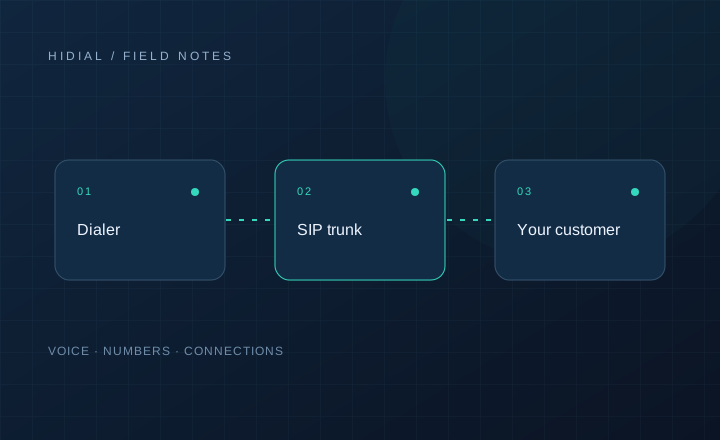
A customer waiting for support may prefer a callback to listening on hold. Virtual hold can make that possible while preserving an agreed place in the service order. The important detail is what the system actually promises: a callback later and a callback that retains queue priority are not necessarily the same thing.
Before offering the option, define how the callback request is created, when it becomes eligible for an agent, and what happens when the customer cannot be reached.
Define the queue promise
Decide whether the original arrival time or a new callback request time determines priority. Explain the behavior accurately instead of claiming that a position is preserved when the system simply adds a fresh outbound task.
Amazon Connect documents queued callback configuration, including the role of queue and routing priorities in preserving order. Other platforms and custom implementations need their own verification.
For ViciDial or a connected telephone environment, confirm the installed routing capabilities and integration design. A lead callback field alone is not proof that virtual hold has been implemented.
Confirm the callback destination
Ask the customer to confirm an appropriate number through the supported flow. Do not assume the incoming caller ID is always the best callback destination, particularly for shared offices or callers using a different telephone.
Collect only the information needed to service the request. Store the relevant queue, original contact identifier, chosen number, and request time so staff can investigate the complete journey.
State operating hours and expected behavior. If the team cannot offer a reliable time estimate, avoid presenting an invented one. Make clear when an after-hours request will be handled.
Reserve capacity for the return call
A callback request still needs agent time and outbound calling capacity. If the center offers the option without planning that capacity, it may move the waiting problem into a less visible backlog.
Choose whether the process secures an agent before dialing the customer or calls the customer first and then connects an agent. Test the consequences of that choice, including what the customer hears when either party is unavailable.
Monitor pending callback age separately from active inbound waiting time. A short live queue is not an improvement if promised callbacks remain unfulfilled.
Control retries and cancellation
Define outcomes for no answer, busy, voicemail, technical failure, and a customer who asks to cancel. Do not assume each condition should trigger an immediate retry.
Use limits approved for the service workflow and make pending work visible to agents. When a customer calls back and resolves the issue, cancel the obsolete callback rather than creating another contact later.
Deduplicate repeated requests carefully. One person may call several times about the same issue, while a shared number may represent several different customers. Preserve enough case context to make that distinction.
Test the customer experience
Pilot ordinary ringing, unanswered attempts, closed queues, transfers, and failure recovery. Check the caller identity used for the return call and whether the agent receives the original issue before speaking.
If you send a confirmation message, treat it as a separate messaging workflow with its own eligibility and reply handling. A callback option does not automatically configure or authorize SMS.
Review completed callbacks, customer waiting after answer, stale requests, repeated attempts, and cases that required another explanation. These measures reveal more than the number of callback requests accepted.
Launch with a fallback path
Give staff a supported way to find, correct, and cancel requests. If the automation fails, the team needs to know which customers are still waiting rather than reconstruct the backlog from scattered logs.
Start with a limited queue and expand after the promised behavior works under real staffing conditions. Contact HiDial with your call routing, queue setup, and callback requirements to discuss a controlled implementation.